29 November 2010

Tycho Brahe's nose, and other delights


Petr David Josek/AP

In all the recent news about the exhumation of 16th-century Danish astronomer Tycho Brahe (did he die from poisoning? stay tuned), important details get overlooked. Like, when they dug him up the last time (in 1901), they couldn't find his nose. Not his real one, his fake one, acquired after the real one was cut off in a student duel. Here's the full scoop from the August 2004 edition of the Annals of Improbable Research (original here). My kind of history writing.
Astronomer Tygo Brahe (born 1546, died 1601; Latinized name: Tycho Brahe) was not just an early geek. When he was exhumed in 1901 to celebrate the three hundredth anniversary of his death (and also to restore his grave), many people were eager to get a look at the famous metal insert that had been substituted for Brahe's birth nose.


He had a fake nose and an eccentric moustache and an alcoholic pet moose. And a psychic dwarf sidekick. Righteous.

The Coming of the Nose

In 1572, as a Student at the University of Copenhagen, Brahe observed a very bright star. He proved that it was a Supernova located outside our solar system. Brahe's later observations of the orbits of Cassiopeia and of a comet made clear that those objects, too, were located more distantly than our moon. All this meant that - contrary to what many people believed - the heavens were changeable, not immutable Šs Aristotle had long ago postulated. Still, Brahe avoided painting a heliocentric view of the universe; he described the earth, rather than the sun, as being at the center of all things heavenly.

To take up his studies, Danish student Tygo had moved from Copenhagen University to the German cities of Leipzig, Wittenberg and Rostock. There, he developed an interest in alchemy and astronomy. He soon became a successfui astronomer. In 1572, he observed the new star Cassiopeia and in 1574, he became a lecturer for astronomy in Copenhagen. Shortly after that, he took up an invitation by Prussian Kaiser Friedrich II to set up the finest astronomical observatory of its time, the "Uraniborg," on the island of Hven in the Sont near Copenhagen. From 1599 on, Brahe worked in Prague. In 1600, the German astronomer Johannes Kepler joined him. Kepler caiculated planetary orbits - basing his caiculations on Brahe's meticulous observations, which Brahe had performed without a telescope.

The Going of the Nose

Tycho Brahe's nose got lost, quite early, in a student fight. On December 10, 1566, Tycho and the Danish blue blood Manderup Parsbjerg were guests at an engagement party at Prof. Bachmeister in Rostock. The party included a ball, but the festive environment did not keep the two men from starting an argument that went on even over the Christmas period. On December 29, they finished the matter with a rapier duel. During the duel, which started at 7 p.m. in total darkness, a large portion of the nose of Brahe was cut off by his Opponent. It was the most famous cut in science, if not the unkindest.

The Second Coming of the Nose

In those times in Germany (and also in Austria), it was socially okay - and even more than okay - to proudly show the signs of a duel ( facial scars and other such marks of distinction). These signified that a man would stand up for his personal honor. However, to cover the - in this case extreme and unusual - disfigurement, Tycho ordered a substitute nose, made from a mixture of silver and gold. This was unusual, because in those days when someone lost a nose in that part of Europe, the replacement, if he or she were fortunate enough to be able to obtain one, was typically made of wax. (This was not as wildly unusual as it may sound to modern ears - it was not uncommon for people who suffered from lupus to lose their noses and attempt to obtain replacements.)

One of Brahe's pupils, Willem Janssoon Blaev (the name was also spelled Wilhelm Janszoon Blaeu), who lived with Brahe for two years on the Island of Hven, remembered that Brahe would always carry an ointment which he used on his nose. Aye, there's the rub - a nasty prize to pay for a hot-blooded fight!

Another Nose

Brahe later received at least one replacement nose for his first replacement nose. We know this because when his body was exhumed, a light greenish coloration on his front cranium was interpreted to be remains of a metal mixture that included copper. The original replacement nose - the nose that everybody had been looking forward to seeing - was, however, gone. The thin metal had corroded, and the coffin made of zinc may have speeded the corrosion process.

Another Accident

Another accident ended even worse for Brahe. One day, he sent his pet moose over to the castle of Landskrona, a city dose to Hven, to entertain a nobleman there. The moose was less interested in dinner conversation than in the castle interiors, and gave itself a tour of the building. Since the animal was completely drunk by that time - people had given the moose too much beer to drink - it feil down the stairs, and broke one leg. Shortly after, it died from the wound. (This incident was reported by Gassendi in 1654; readers who take the trouble to look up its history will be entertained or aghast, depending on their feelings about animal rights, about the morality of anyone or anything drinking alcoholic beverages, and about the ergonomic deficiencies of the period's architectural designs.)

A Side Note on Duels

By the way, duels by rapier or pistol did not, er, die out in Germany until the nineteenth Century, despite being severely forbidden by law. Even the German Head of the State Bismarck, who took part in many duels as a Student, in all seriousness asked the famous professor of medicine Rudolf Virchow for a duel in 1865! The two were political rivals, and Bismarck feit that Virchow had disrespected him by accusing Bismarck of not having read a report relating to the abolition of the German navy. The men did not duel, and so were able to go through life with noses intact.

Acknowledgements

A big thank you to Peter Scheible, who translated the original paper describing the exhumation ("Tycho Brahe, Casopis Spolecnosti Pratel Starozitnosti ceskych v Praze", J. Herain and J. Matiegka, vol. 9, 1901, pp. 105-30) from Czech into German. A general source is Tycho Brahe, the Man and His Work (original in Latin) by Pierre Gassendi, 1654. This book was translated into Swedish, and commentary added, by Wilhelm Norlind in 1951.

28 November 2010

UNESCO Plays a Zero-Sum Game with Africa

You know it's gonna be bad, just from the title:

UNESCO to Africa: Don't Swap Heritage for Progress

NAIROBI, Kenya (AP) – The top official from the U.N. body in charge of preserving historical sites says the development of economies in Africa should not be made at the expense of nature and culture.

Irina Bokova, director general of UNESCO, was responding to a question on Monday about a plan by Tanzania to build a highway through Serengeti National Park.

The 260-mile (420-kilometer) road would bisect the northern Serengeti, potentially jeopardizing the 2 million wildebeests and zebra who migrate in search for water from the southern Serengeti into Kenya's adjacent Masai Mara reserve.

Conservationists says the road could devastate wildlife and should be built in a different location. Tanzania's government says it's necessary for development.

I want to scream whenever I read one of these 'conservation vs. development' stories. It's the WRONG MESSAGE. Wrong, wrong, wrong. Bokova is well-intentioned but it sounds like she's doing that 'white person scolding the ignorant blacks' thing that they used to do back in the colonial days. Oh wait, actually, that IS what she's doing. Preserve your land so white tourists can enjoy looking at wildebeests! That's the bottom line, folks, the wildebeests! It's a paternalistic, colonialist type of sentiment, and therefore NOT EFFECTIVE as an argument for conservation. What the Director-General of UNESCO needs to say is something like this:

This road is a bad idea if you want to develop your country. You guys are throwing away money by developing this area. Not only could the ecological impacts of roads have serious side effects (unplanned development happens along roads, and can be sickeningly expensive for developing countries) but you're going to lose a lot of tourist dollars if people think this area is 'ruined'. Let UNESCO help you figure out a plan that achieves your goals for MODERN DEVELOPMENT and also makes you MORE MONEY to develop your economy in ADDITION to protecting these animals.
The message has to be that conservation and development are not enemies - it's not a zero-sum game - but that when they're done right they reinforce each other. They should be additive! Gotta make the pie higher, as a great man once said. Conservation has to be presented as something positive for people, alive, today. Because the fantasy that heritage places, or natural places, are innocent fragments of the past that have to be defended against the big, bad present-day world is a stupid lie anyway. Conserved areas reflect our post-post-modern global power structure just as much as any road, skyscraper, or however many internets you can fit into one computer these days. Conservation has to speak to relevant social problems, or it becomes a kind of oppression.

25 November 2010

Students occupy Colosseum, Tower of Pisa

This afternoon students protesting austerity plans for Italy's education system occupied iconic monuments around Italy, including the Colisseum and the leaning tower in Pisa.


Photo IGN

The proposed cuts of over €12 billion would reduce dramatically student stipends, research funds, cut course offerings, and cost 130,000 jobs. Protests gripped Rome, Florence, Bologna, Pisa, and many other cities. As jaded as I am about protests, I was gripped by the drama of occupying these ancient monuments. (Though the students' attempt to bum rush the Italian Senate chambers was good too.)


Scuffles between cops and students broke out here in Rome, where I happen to be today to have Thanksgiving with some friends - we saw my student and researcher comrades on the march but were home to start on Thanksgiving dinner before the tear gas started smoking.

The "education reforms" proposed by the governments are a Trojan horse for privatization and slashing "unproductive" subjects like literature and the arts. The symbolic connection between the monuments of ancient culture and contemporary knowledge under threat is kind of forced, but it still works for me. Probably because I agree with the analysis on the Italian street - those who created the economic crisis took the world economic on a long speculative binge, and now that they're hung over they want the rest of us to pay their bar bill for them by sacrificing our futures. Hell with that.

Finally: a bunch of people made these effigies of classic books as shields for scuffling with the cops. Petronius' Satyricon as riot equipment? I think Encolpius would appreciate those priapic police batons.


13 November 2010

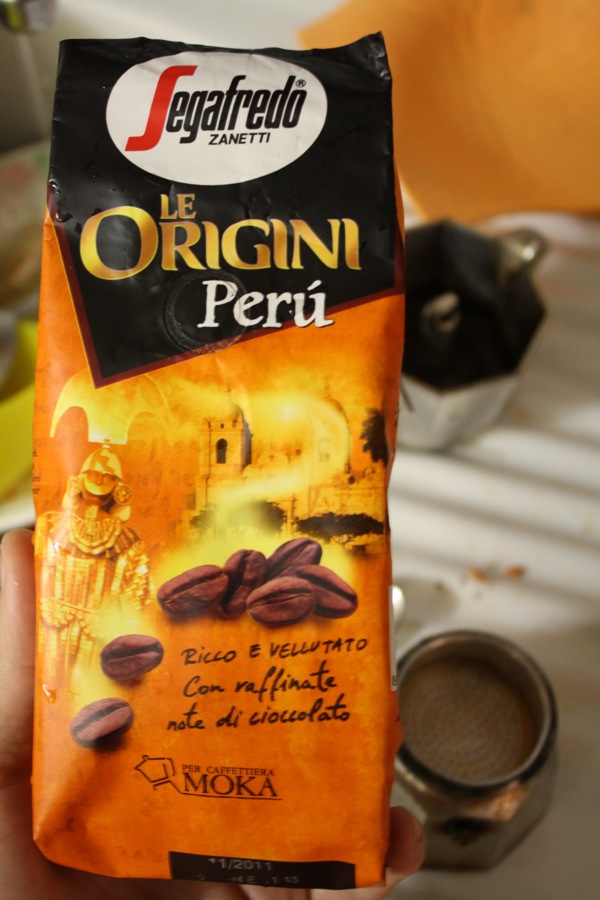
The Lord of Sipán infiltrates my morning coffee


My morning coffee for the last couple weeks. It's like a tourist brochure for Perú.

Why hello there, Lord of Sipán! Are you monitoring me? Supervising the coffee bean harvest? Your outfit is a little too freaky for this early in the morning. At least you didn't bring your buddies.

Moving to Bologna

Apologies for the radio silence from Archaeopop over the last couple weeks. I've been in the throes of moving to Bologna, Italy over the last month or so. Moving anywhere new has its unexpected, time-consuming surprises, especially in countries with a complex bureaucracy. (Yesterday I went to something called the 'Scientific Police' to give them my fingerprints.)

Some of you might be interested in what brought me here. I found a postdoctoral fellowship in the Department of Management here, working with a small group of faculty and students who are interested in the management of museums and cultural heritage. This summer we started a research project in Turkey, where we'll try to understand the connections between public sector reform (outsourcing, privatization), the local traditions of education and training, and how museums and archaeological sites are operated.

Thinking about the role of government in 'producing' archaeology has been really interesting - it was not a part of my training at all but it explains a lot of peculiar things that people find frustrating when they get to their fieldwork. I have a suspicion where people dig in Turkey (and other countries) is influenced more than we'd like to think by bureaucratic requirements, and by what's going on in the government at a given moment. More evidence that the archaeological record, for everything it tells us about the past, is given its shape by the present.

Being in a management department is an amusing culture shock for all concerned - when I told them I'm an archaeologist several people got this amazing facial expression that was like 'that's cool' and 'whut?' and 'perhaps you are lost, can I help you?' mashed up into one facial expression. Drop whatever humanist stereotypes you might have about business people though, it's a very interesting and very nice group of people.

p.s. Obviously living in Italy has some benefits in terms of archaeopop-iness, since it's basically a giant museum that everyone pretends is a country. I'll be sharing as much as I find the time for!

p.p.s. Bring on the sliced meat jokes. I never get tired of them.

26 October 2010

Google to put Dead Sea Scrolls online

Google is getting into the conservation business, as the AP reports:

Israel's Antiquities Authority and Google announced Tuesday that they are joining forces to bring the Dead Sea Scrolls online, allowing both scholars and the general public widespread access to the ancient manuscripts for the first time.

The project will grant free, global access to the 2,000-year-old text — considered one of the greatest archaeological finds of the last century — by uploading high-resolution images that are exact copies of the originals. The first photographs are slated to be online within months.

The scrolls will be available in their original languages, Hebrew, Aramaic and Greek, and at first an English translation. Eventually other translations will be added, and Google's translation feature may also be incorporated. They will also be searchable.

This is the future of epigraphy and papyrology: open-source texts, available to the world, worked on collaboratively online. Heck, it's been the future: the Advanced Papyrological Information System (APIS) was already going 10 years ago. I was lucky to know one of the pioneers in digitizing papyri at Michigan, Traianos Gagos†, who is sorely missed. Traianos understood that being open with data and kind to colleagues would produce more and better scholarly results.

It sounds obvious, but mentality that archaeological data is a private stash 'owned' by one scholar has not totally faded away. Even I'm old enough to remember the early 1990s controversy over 'freeing' the Dead Sea Scrolls from a cartel of scholars who had exclusive publishing rights (see this book, or this old chestnut from William Safire on the case).

Archaeologists and allied trades need to learn that this mentality is counterproductive: instead of being afraid of the non-expert, we need to recruit them and figure out to put their enthusiasm to work! Keeping data private only fuels the ravings of the ancient astronaut theorists.

These Dead Sea Scrolls conspiracy videos sure are fun though.


Much more fun than the stupid action movie soundtrack and fuzzy-light 'reenactments' that Nat Geo is pushing anyway...

25 October 2010

Neanderthal lovin'

I never got around to posting this back in may, maybe you saw this (or this) back in May:
Neanderthals, Humans Interbred—First Solid DNA Evidence
Most of us have some Neanderthal genes, study finds.

Ker Than
for National Geographic News
Published May 6,2010

The next time you're tempted to call some oaf a Neanderthal, you might want to take a look in the mirror.

According to a new DNA study, most humans have a little Neanderthal in them—at least 1 to 4 percent of a person's genetic makeup. The study uncovered the first solid genetic evidence that "modern" humans—or Homo sapiens—interbred with their Neanderthal neighbors, who mysteriously died out about 30,000 years ago.

What's more, the Neanderthal-modern human mating apparently took place in the Middle East, shortly after modern humans had left Africa, not in Europe—as has long been suspected. "We can now say that, in all probability, there was gene flow from Neanderthals to modern humans," lead study author Ed Green of the University of California, Santa Cruz, said in a prepared statement.
It always seemed weird to me that the idea of these two kinds of humans interbreeding was always so taboo. Of course, Neanderthals were discovered in a time (1829) when Europe was in the grip of a deep interest in racial difference and classification, so it's not surprising that they were immediately consigned to absolute difference - and sex between slightly different shades of contemporary human was illegal in a lot of places only a generation ago. It never made sense on a gut level to me, though - Neanderthals were people, they could speak, make tools and jewelry, bury their dead, and lived along side Homo Sapiens Sapiens for millenia. The idea that at least a few of them wouldn't get it on at some point is ridiculous. (There's also an answer to this question here.) I kind of like the idea that I'm part Neanderthal.

Though maybe I just read Clan of the Cave Bear one too many times as a kid.


On the other hand, maybe it was the Neanderthals who were racist against us. Just sayin'.